Open: 10am - 4pm, Tuesday - Saturday

  • Buy Tickets
  • Visit Us
  • Support Us
  • Subscribe to Yanks!
Yanks Air Museum
  • HOME
  • COLLECTIONS
    • Collection By Timeline
    • 1903-1918 / Early Birds
    • 1919-1938 / Golden Era
    • 1939-1945 / World War II
    • 1946-1975 / Jet Age
    • 1976-Present / Modern Jets
    • Drones & Missiles
    • Vehicles & Equipment
    • Specialty
  • ABOUT
    • Our History
    • Flight Team
    • Featured News
    • Preservation & Restoration
  • EVENTS
  • BOOK VENUE
  • GIFT SHOP

Open: 10am - 4pm, Tuesday - Saturday

  • Buy Tickets
  • Visit Us
  • Support Us
  • Subscribe to Yanks!
Yanks Air Museum
  • HOME
  • COLLECTIONS
    • Collection By Timeline
    • 1903-1918 / Early Birds
    • 1919-1938 / Golden Era
    • 1939-1945 / World War II
    • 1946-1975 / Jet Age
    • 1976-Present / Modern Jets
    • Drones & Missiles
    • Vehicles & Equipment
    • Specialty
  • ABOUT
    • Our History
    • Flight Team
    • Featured News
    • Preservation & Restoration
  • EVENTS
  • BOOK VENUE
  • GIFT SHOP
Yanks Air Museum
Yanks Air Museum
1 event found.

Events

Events Search and Views Navigation

Event Views Navigation

  • List
  • Month
  • Day
Today
  • August 2026

  • Wed 19
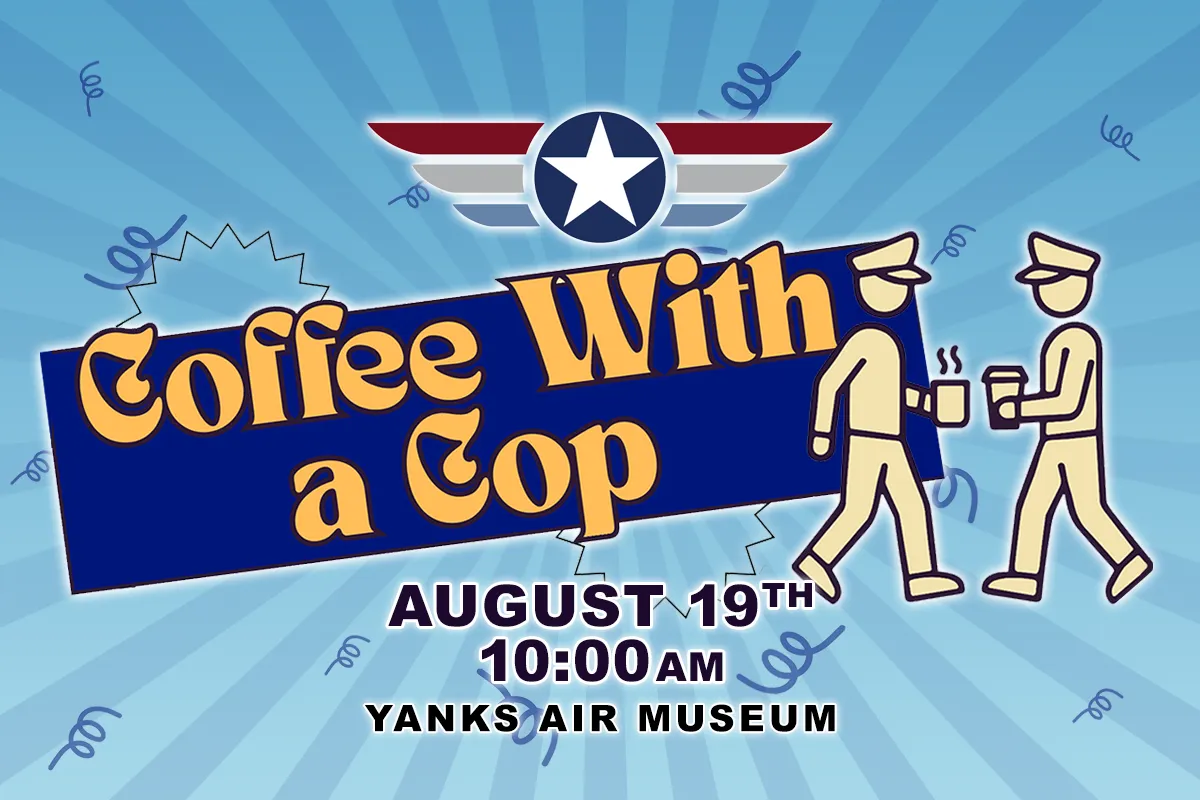
    Coffee With A Cop on August 19, 2026 at Yanks Air Museum

    Coffee With a Cop at Yanks Air Museum

    Featured Wednesday, August 19 @ 10:00 am - 1:00 pm
    Yanks Air Museum 15121 Stearman Drive, Chino, United States

    Meet Local Law Enforcement Veterans Over Coffee at Yanks Air Museum WEDNESDAY / AUGUST...

  • Today
  • Next Events
  • Google Calendar
  • iCalendar
  • Outlook 365
  • Outlook Live
  • Export .ics file
  • Export Outlook .ics file
Stay in Touch

Join our email list and be the first to know about special events and more!

✈️ The Stinson L-5 Sentinel: Small Airplane, Big J ✈️ The Stinson L-5 Sentinel: Small Airplane, Big Job

It didn’t carry the firepower of a fighter or the bomb load of a heavy bomber, but the Stinson L-5 Sentinel became one of the most useful aircraft in the U.S. military inventory during World War II.

Developed from lessons learned with Stinson’s prewar Voyager series, the L-5 was purpose-built for military liaison work. The Army initially classified the new aircraft as the O-62, for “observation,” before redesignating it L-5 when the liaison category was introduced in 1942.

Light, unarmed, and exceptionally versatile, the Sentinel was designed to go where larger aircraft often couldn’t. Its short-field capability allowed crews to operate from rough, improvised strips close to the front, carrying out missions that included artillery spotting, reconnaissance, message and personnel transport, delivery of supplies, rescue, and casualty evacuation.

That last role became especially important. Later versions were modified to accommodate a litter patient, allowing wounded personnel to be flown out of remote areas where conventional ambulances or larger transports could not easily reach. Liaison pilots often operated from primitive fields and under combat conditions, making the little L-5 an important link between front-line troops and the larger Allied support network.

The Sentinel also proved its usefulness far beyond World War II. L-5s continued serving into the postwar years and saw further military use during the Korean War era.

Despite its modest size, the L-5 represented a major shift in how armies used aircraft. Aviation no longer had to operate only from established airfields or high above the battlefield. A light airplane could work directly alongside ground forces, carrying people, information, and urgently needed supplies almost wherever they were required.

And that history is more than static here at Yanks Air Museum. Our Flight Team has returned an L-5 Sentinel to the air, allowing one of these remarkable liaison aircraft to continue doing what it was built to do more than 80 years ago: fly.

Sometimes the aircraft with the biggest impact aren’t the biggest aircraft at all. ✈️
You've seen our staff show you around the planes t You've seen our staff show you around the planes themselves, but there's some history behind everything here! Have you ever seen someone with this patch?
From a zoom-in on that beautiful nose... tell us w From a zoom-in on that beautiful nose... tell us what kind of plane this is! 

📸 credit @roberttphotography
📅 On This Day in Aviation History — September 21, 📅 On This Day in Aviation History — September 21, 1956

Yes, an airplane really did once shoot itself down.

On September 21, 1956, Grumman test pilot Tom Attridge took an F11F-1 Tiger into the skies off Long Island for a high-speed test of its four 20 mm cannon. During the test, Attridge fired two bursts while descending at supersonic speed.

Then things got strange.

After leaving the guns at roughly 3,000 feet per second, the projectiles began losing velocity to aerodynamic drag while gravity pulled their trajectories downward. Meanwhile, the Tiger continued accelerating through its dive. The aircraft and its own gunfire eventually arrived at the same place at the same time: Attridge had caught up with the rounds he'd fired only seconds earlier.

Rounds struck the Tiger's nose, windshield and engine intake. Attridge initially thought he'd suffered a bird strike, but engine damage made reaching the Grumman airfield impossible. He ultimately crash-landed short of the runway. Although the aircraft was lost, Attridge survived the remarkable accident.

The incident sounds almost impossible until you consider the physics. It wasn't that the Tiger simply flew faster than a freshly fired cannon round. Rather, the rounds slowed considerably after being fired and followed a descending trajectory, while Attridge's aircraft continued its high-speed dive into their path. The result gave the F11F-1 one of the strangest distinctions in aviation history.

Have you seen OUR F11F-1 here at Yanks?
“Go fly the plane” they said. “It’ll be easy” th “Go fly the plane” they said. 

“It’ll be easy” they said. 

“The Facebook audience wants to see it” they said. 

Looks like Geebs changed his mind.
✈️ Happy Girls in Aviation Day! If you've been fo ✈️ Happy Girls in Aviation Day!

If you've been following along this month, you've already met two remarkable women whose stories became intertwined during the earliest days of American aviation, but since September also marks the birthday of another pioneering woman, Thérèse Peltier, let's rewind the story another two years.

In July 1908, Peltier became the first woman known to fly as a passenger in a heavier-than-air aircraft. Soon after, Peltier learned to operate the aircraft herself and made several solo flights, becoming one of the earliest women ever to take the controls of an airplane.

Then came September 1910.

Sometime early that month, Blanche Stuart Scott unexpectedly became airborne while practicing with an aircraft. Whether that brief flight was entirely intentional—and even its exact date—has been debated ever since.

On September 16, Bessica "Bessie" Raiche deliberately took to the air in a Wright-type biplane she and her husband had built themselves, earning recognition for the first accredited solo flight by a woman in the United States.

Aviation itself was still in its infancy, yet women were already riding in airplanes, learning to control them, building them, setting records, and exploring what this extraordinary new technology could do. Women weren't late to aviation history. They were there while aviation history was being written.

More than a century later, that's what makes their stories particularly fitting for Girls in Aviation Day.

Created by @womeninaviation International, this annual event introduces young people to the enormous variety of possibilities within aviation and aerospace—careers the pioneers of the early 1900s could scarcely have imagined.

Our collection tells the story of what happens when people look at the limits of aviation and decide to push beyond them. Preserving that history isn't only about remembering the people who came before us. It's also about giving the next generation somewhere to begin.

Maybe one of the girls discovering aviation today will become a pilot. Maybe she'll design an aircraft, turn wrenches on one, explore space—or find an entirely new way to leave her mark on aerospace.

Yanks Air Museum

VISITOR INFORMATION
  • BUY TICKETS ONLINE
  • BUY ANNUAL PASS
  • VISIT US
  • SCHEDULE A TOUR
  • CONTACT US
  • SUBSCRIBE TO YANKS!
EXPLORE OUR MUSEUM
  • COLLECTIONS
  • EVENTS
  • FEATURED NEWS
  • SUPPORT US
  • ONLINE GIFT STORE
LOCATION & HOURS

15121 Stearman Drive
Chino, CA 91710

Phone: (909) 597-1735

Open Tuesday thru Saturday
10:00 a.m. to 4:00 p.m.

Closed Sunday and Monday
Closed Major Holidays

© 2022-2026 Yanks Air Museum. All rights reserved. EIN 953538758  /  Site Map  /  Privacy Policy  /  Terms & Conditions /  Cookie Policy

Press Enter / Return to begin your search.

Have an Account?

To keep connected with us please login with your personal info.

Sign In

Create Account

Enter your personal details and start journey with us.

Sign Up

Sign in to Yanks Air Museum

  • Lost Your Password?

Create Account

New membership are not allowed.

  • Home
  • Collections
    • Collection by Timeline
    • 1903-1918 / Early Birds
    • 1919-1938 / Golden Era
    • 1939-1945 / World War II
    • 1946-1975 / Jet Age
    • 1975-Present / Modern Jets
    • Drones & Missiles
    • Vehicles & Equipment
    • Specialty
  • About
    • Our History
    • Flight Team
    • Featured News
    • Preservation & Restoration
  • Events
  • Book Venue
  • Gift Shop
Museum Hours

10:00am–4:00pm, Tuesday thru Saturday

Museum Location

15121 Stearman Drive, Chino, CA 91710

Buy Tickets
Visit Us
Support Us
Contact Us
Subscribe to Yanks!